Japanese Snow Monkeys: Wildlife Facts, Habitat, and Hot Springs
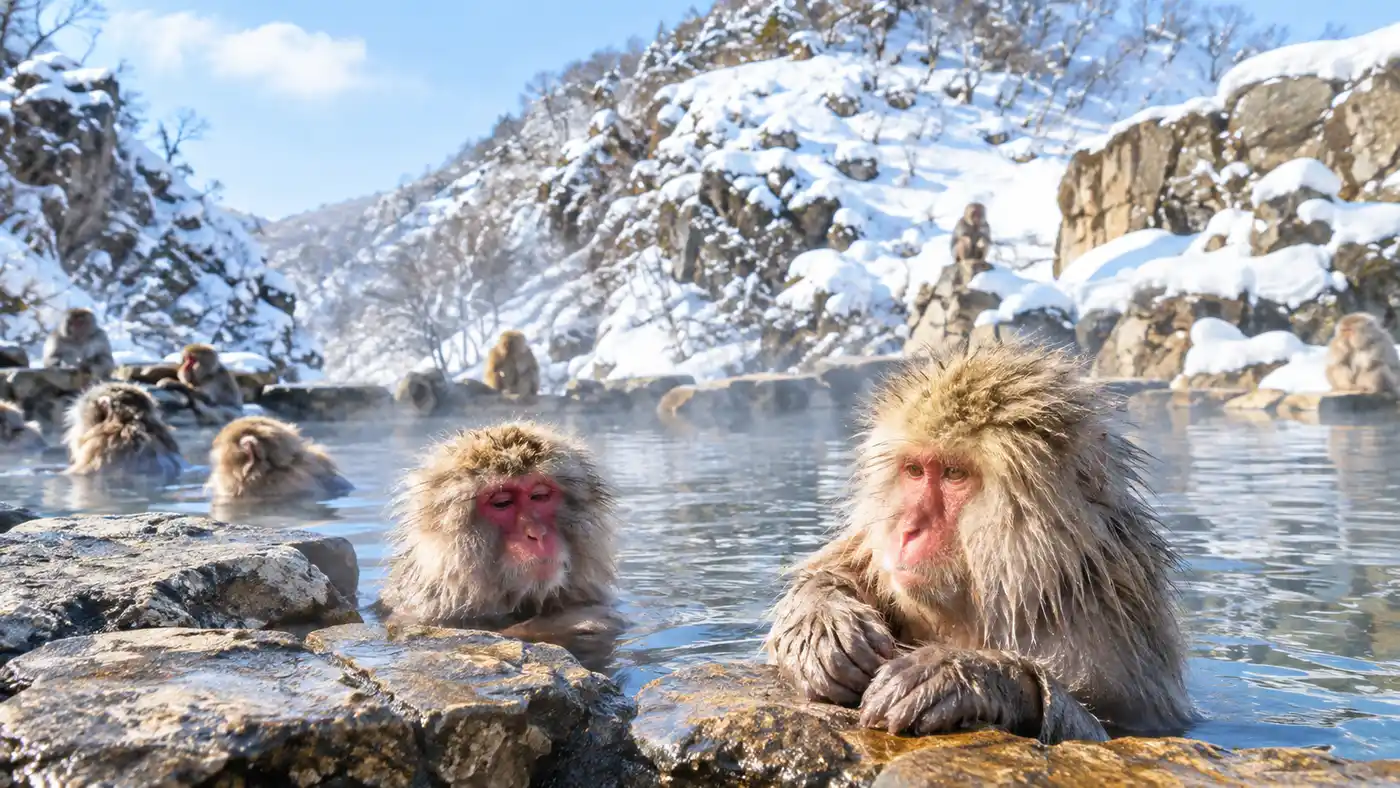
Nobody warned me about the steam. Stepping out from the shadowed cedar path into the river gorge at Jigokudani, the first thing hitting your face is cold river air mixed with heavy sulfur vapor. Then you spot them. Perched on granite boulders encrusted with ice, dozens of pink-faced macaques sit completely unbothered by the frost gathering on their brows. The japanese snow monkey is famous across the globe for this exact scene, soaking chest-deep in steaming thermal mineral water while snow drifts onto the surrounding pine branches.
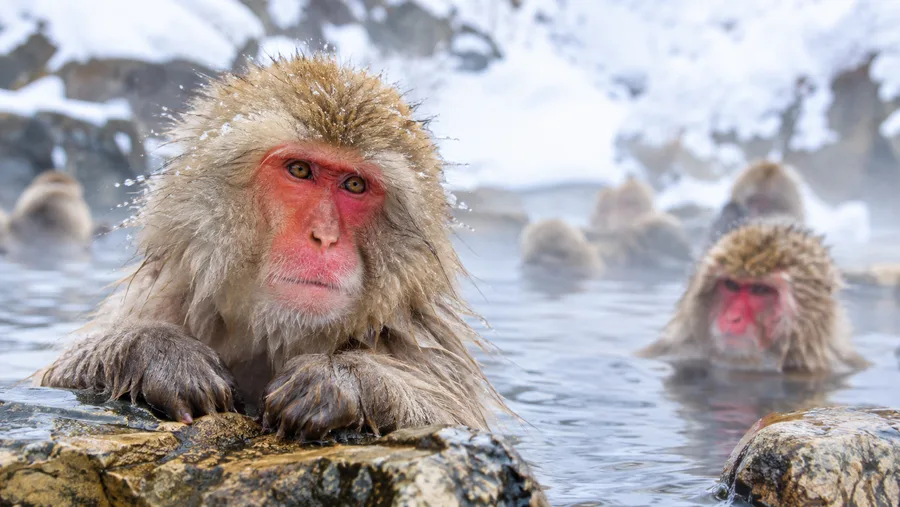
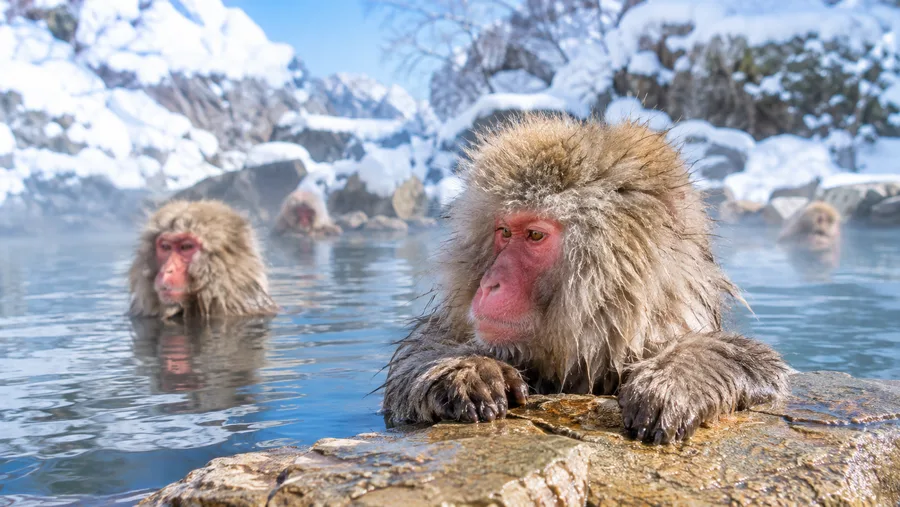
Seeing them in person feels slightly unreal. They look almost human when they close their eyes against the rising steam, resting their forearms on the stone edges of the pool. Beneath the postcard imagery sits a complex wild animal that has survived some of the harshest winter conditions faced by any primate on earth. If you want to understand these creatures beyond the viral photos, you need to look at how they live, why they bathe, and what makes their mountain home in Nagano so special.
Book your snow monkey park experience:
The Science and Survival of the Japanese Snow Monkey
Scientifically designated as Macaca fuscata, the snow monkey japanese macaque is native to the Japanese archipelago. They hold a distinct biological record. Excluding humans, no other living primate lives further north or endures a colder climate. You can find them across Honshu, Shikoku, and Kyushu, but the populations living in the high-elevation valleys of Nagano have adapted to conditions that would kill most other monkey species within days.
Winter in the northern Nagano mountains means snow covers the ground for up to four months straight. Temperatures regularly plummet to minus 10 degrees Celsius, occasionally dipping even lower when arctic winds sweep down from the Sea of Japan. To stay alive, their bodies go through dramatic shifts:
- Dense winter underfur: Their coat thickens dramatically by late October, trapping a layer of insulating air directly against the skin that keeps freezing moisture from reaching the epidermis.
- Reduced extremities: Compared to tropical macaques, their tails are remarkably short, averaging just 7 to 9 centimeters, an evolutionary tweak that stops frostbite from taking their tail tips.
- Metabolic slowdown: During the leanest stretch of January and February, the troop conserves energy by cutting down daily movement, spending hours huddled together in tight clusters known as saru-dango or monkey dumplings.
- Scavenged forage diet: When fruits and wild berries disappear beneath a meter of hard snow, their digestive tract adapts to breaking down bitter tree bark, dormant twigs, and dry pine seeds.
I watched an older female strip bark from a frozen birch branch for twenty minutes without stopping. Her fingers were nimble despite the frost. Researchers have tracked these troops for decades, discovering that their gut microbiomes shift radically between summer and winter to process tough cellulose when green vegetation is gone.
Pro tip: Bring a zoom lens with at least 200mm reach if you shoot photography, because park rangers strictly forbid visitors from stepping off the timber walkways onto the rocks where the animals rest.
Why These Monkeys in Japan Bathe in Hot Springs
A common misconception is that all japanese monkeys across the country love to soak in volcanic water. They do not. The behavior belongs almost exclusively to the single troop living in the Jigokudani valley along the Yokoyu River. Even more surprising is the fact that this is not an ancient ancestral instinct. It is a learned cultural tradition that started by accident roughly sixty years ago.
In 1963, a young female macaque named Mukubiko wandered down from the cliffs into the outdoor thermal bath of Korakukan, a local historic ryokan inn nestled on the riverbank. She slipped into the hot water, discovered it felt great, and stayed. Soon other juveniles copied her. Mothers followed their offspring, and within a few years, bathing became a normal part of life for the entire band. Because human guests were reasonably uncomfortable sharing an onsen with dozens of wild primates, the local authorities constructed a dedicated thermal pool higher up the riverbed in 1964. That pool forms the centerpiece of the modern Jigokudani Yaen-Koen reserve.
For a long time, biologists debated whether hot spring monkeys soaked strictly for warmth or if there was something deeper going on. In 2018, a research team from Kyoto University led by Dr. Rafaela Takeshita collected fecal samples from the Jigokudani snow monkeys during spring and winter. They measured levels of fecal glucocorticoid metabolites, a biological marker directly tied to stress.
The findings confirmed what any human who loves a hot tub already suspected. Monkeys that bathed regularly in winter showed significantly lower stress hormone levels than non-bathers in the exact same troop. Cold weather places massive physiological strain on the body. Sitting in 41-degree mineral water gives them a real, measurable survival advantage by melting away cold stress, though dominant adult females spend the most time monopolizing the hottest spots in the pool.
Note: You will notice wet monkeys climbing out of the pool into sub-zero air without shivering, which puzzles most people. Their thick fur is so dense that water barely touches their skin, and their rapid body heat dries the outer guard hairs within minutes.
Troop Hierarchy, Social Bonding, and Daily Life
Life inside the troop is strictly organized around female bloodlines. Japanese macaque society is matrilineal, meaning daughters remain with their birth troop their whole lives, inheriting social rank directly beneath their mothers. Males, on the other hand, leave the group once they reach sexual maturity around age four or five, wandering off to join neighboring bands or living as solitary bachelors on the ridge lines before attempting to work their way into a new troop.
Dominance affects every single part of daily existence for a jigokudani monkey. The highest-ranking matrons get first access to food scattered by the park wardens, the safest sleeping spots high in the crags away from mountain hawk-eagles, and prime real estate in the steaming water. If a low-ranking juvenile steps into the pool near an alpha female, a sharp flash of canine teeth or an open-mouthed stare usually sends the youngster scurrying back out onto the gravel.
Grooming is the glue holding these complex relationships together. It takes up several hours of their day. While visitors often assume the monkeys are picking out fleas or lice, it is actually about removing dry skin, salt crystals, and tiny dirt particles. More than hygiene, grooming functions as social currency. Subordinate females groom dominant matriarchs to build alliances, soothe tension after squabbles, and secure permission to sit nearby in the thermal pool when the mountain air turns brutal.
| Season | Average Valley Temp | Primary Wild Diet | Hot Spring Usage | Dominant Troop Activity |
|---|---|---|---|---|
| Winter (Dec–Mar) | -5°C to 2°C | Tree bark, dormant buds, dry seeds | Constant (up to 3-4 hours daily) | Thermal soaking, communal huddling |
| Spring (Apr–Jun) | 8°C to 18°C | Wild garlic, fresh sprouts, young leaves | Rare (occasional morning dip) | Birthing season, infant nursing |
| Summer (Jul–Aug) | 20°C to 28°C | Insects, wild berries, mountain fruits | Infrequent (used to cool off or play) | Active foraging, river swimming |
| Autumn (Sep–Nov) | 5°C to 14°C | Acorns, chestnuts, wild walnuts | Moderate (increases with first frost) | Fat storage, intense mating disputes |
Seeing the change between seasons makes you appreciate their flexibility. If you are timing your trip across different seasons, you will see a completely different social dynamic depending on whether you arrive in deep winter or late spring when new babies cling to their mothers' stomachs.
Book your snow monkey park experience:
Visiting the Hot Springs Snow Monkeys in Nagano
Getting to the park requires walking a quiet forest trail that winds for about 1.6 kilometers through a towering stand of Japanese cedar. The path begins near the bus drop-off at Kanbayashi Onsen. It takes roughly 35 minutes at a steady pace, depending on whether the dirt track is slick with packed mud or packed ice. Honestly, the walk itself is half the joy of the visit. The sound of running mountain brooks accompanies you the entire way, broken only by the crunch of crampons on snow during the colder months.
Once you reach the gatehouse, pay the modest admission fee (around 800 yen for adults), and descend into the canyon, you enter an environment with zero cages or fences. The monkeys roam entirely wild. They run across your boots, wrestle on the handrails, and ignore tourists with complete, unshakeable indifference. Because staff have fed them supplemental barley and soybeans since the 1960s without ever attempting to tame, pet, or hold them, the animals perceive humans as neutral furniture in the landscape.
To keep this relationship working, the reserve enforces simple rules that every visitor must respect:
- Keep your hands to yourself: Never attempt to touch a monkey, even if an inquisitive four-month-old infant walks directly over your shoes.
- Avoid direct eye contact: Staring intently straight into an adult male's eyes is viewed as an explicit challenge, often prompting a sudden lunge or aggressive tooth-bearing display.
- Hide all food and bags: Do not carry snacks in exposed pockets or rustle plastic convenience store bags, as the sound triggers food anticipation and can cause disputes.
- Maintain a polite buffer: Give them at least one to two meters of clearance along the pathways so you never trap an animal against a stone embankment.
It is surprisingly easy to lose track of time standing by the pool. I spent nearly two hours watching two siblings dunk each other beneath the surface like human kids before an older matron walked between them and ended the game with one look.
Common Myths About the Japan Hot Spring Monkey
Pop culture has built up a few strange ideas about these animals over the years. Chief among them is the belief that the monkeys in hot springs japan spend their entire lives in the water. In reality, soaking is primarily a cold-weather coping tool. On warm July afternoons, you might find the pool completely empty for days on end while the troop wanders miles up the mountain hunting for mountain berries, grubs, and fresh shoots.
Another myth is that these animals are pampered pets maintained for foreign tourism. They are entirely wild. They sleep up on jagged rock faces at night, vulnerable to freezing blizzards and mountain predators. Park rangers scatter just enough grain to keep the troop from raiding apple orchards in nearby Yamanouchi town, but the monkeys forage for the bulk of their food in the surrounding national park.
People also frequently call them ice monkeys japan or snow apes. Monkeys have tails; apes do not. While their tails are short, they are undeniably Old World monkeys belonging to the same broad family as rhesus and olive baboons. Their ability to thrive in deep snow often confuses first-time travelers who instinctively associate monkeys with tropical jungles and banana trees.
Finally, travelers sometimes expect pristine alpine spring water that smells like a spa resort. The pool is natural, mineral-heavy, and shared by dozens of wild animals all day long. It is murky, full of floating fur and biological sediment, and definitely not somewhere a person would want to step foot into, despite how appealing the warmth looks from the freezing river bank.
Frequently Asked Questions about japanese snow monkey
Do the monkeys soak in the hot springs during summer?
They do occasionally enter the pool in summer, but mostly to cool off, splash around, or retrieve grains tossed into the water by rangers. The long, meditative soaks seen in travel documentaries happen almost exclusively from December through March when valley temperatures stay near freezing.
Can visitors bathe with the snow monkeys in Jigokudani?
No, visitors cannot enter the monkey pool under any circumstances. If you want to experience the local hot spring water yourself, several traditional ryokan inns in nearby Shibu Onsen and Kanbayashi Onsen feature fantastic guest baths just a few miles down the mountain.
Are the snow monkeys dangerous to travelers?
They are generally very peaceful and ignore visitors entirely. Aggression only happens when tourists break the rules by trying to pet them, cornering an infant, brandishing food, or making aggressive eye contact with large adult males.
Quick Reference
- Scientific name: Macaca fuscata
- Habitat: Honshu deciduous and subalpine forests
- Troop size: Around 160 individuals at Jigokudani
- Pool temperature: Maintained near 41°C (106°F)
- Winter forest walk: 1.6 km each way from bus stop
Book your snow monkey park experience:
My Take
Making the journey up into the snowy peaks of Nagano to watch these animals is one of the few wildlife encounters that genuinely lives up to its reputation. It feels grounded, rough, and honest. Just be sure to wear warm waterproof boots, give the animals the personal space they deserve, and take a few quiet minutes to watch how they care for each other in the snow.
Read more about snow monkey park.