Best Time to Visit Snow Monkey Park: Seasons and Weather
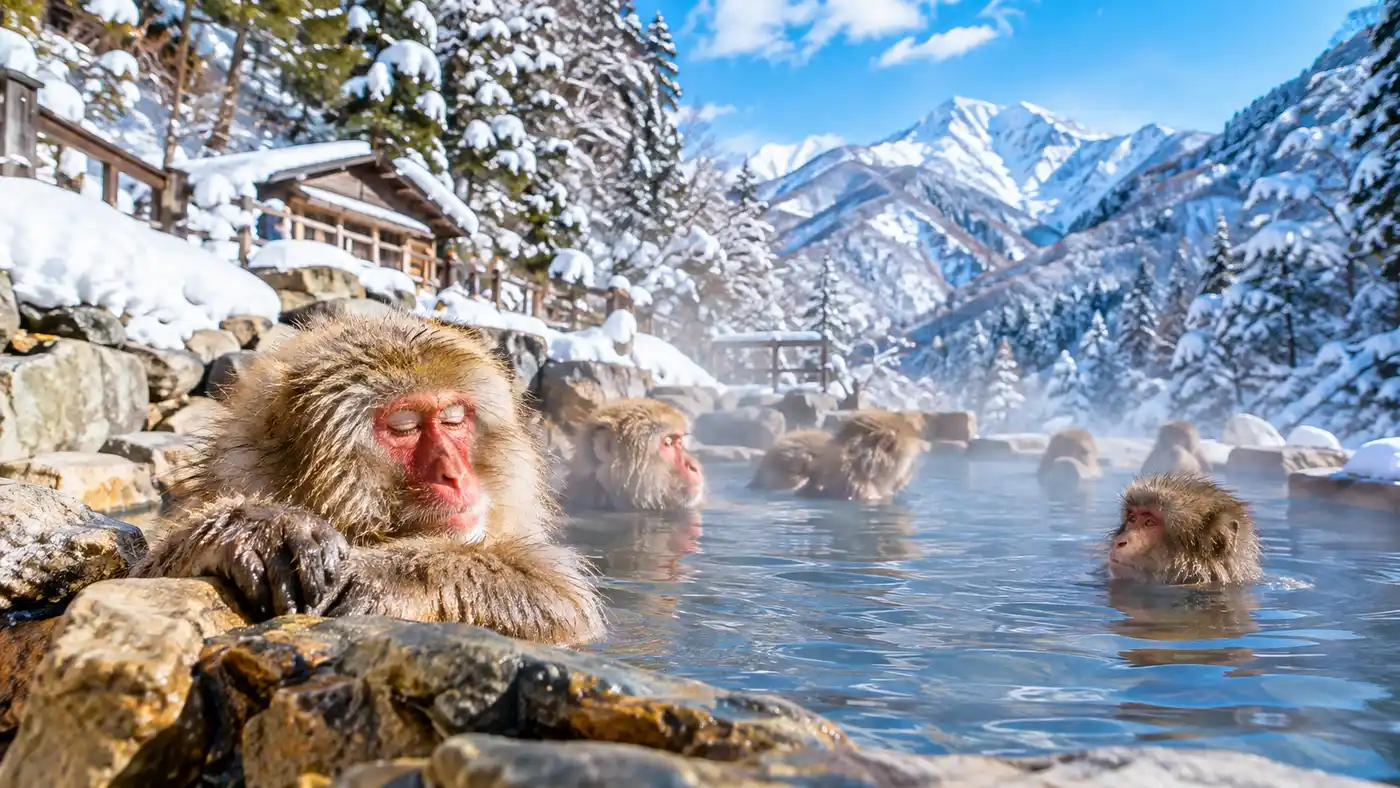
Most travelers assume there is only one correct answer to this question. You picture steam drifting off dark mineral water, surrounded by gray boulders, with a wild macaque blinking frost off its eyelashes. If that specific postcard is the image you want, the best time to visit snow monkey park is January or February. That is when the gorge freezes solid, and the animals spend hours soaking to survive the mountain air. Yet arriving in the dead of winter brings icy footpaths, thick crowds, and transport cancellations if a heavy storm sweeps across the Sea of Japan.
The valley shifts dramatically across the seasons. Jigokudani sits inside a steep cedar canyon at an elevation of roughly 850 meters. The local weather swings between minus 8 degrees Celsius on raw winter mornings to 30 degrees during humid summer afternoons. Because these Japanese macaques are wild, their behavior is tied directly to temperature, forest food supplies, and their breeding cycles. Understanding how the valley changes month by month will help you choose between powdery snow, newborn babies, or peaceful forest walks.
Book your snow monkey park experience:
Winter Conditions: December to March and Snow Monkey Park Weather
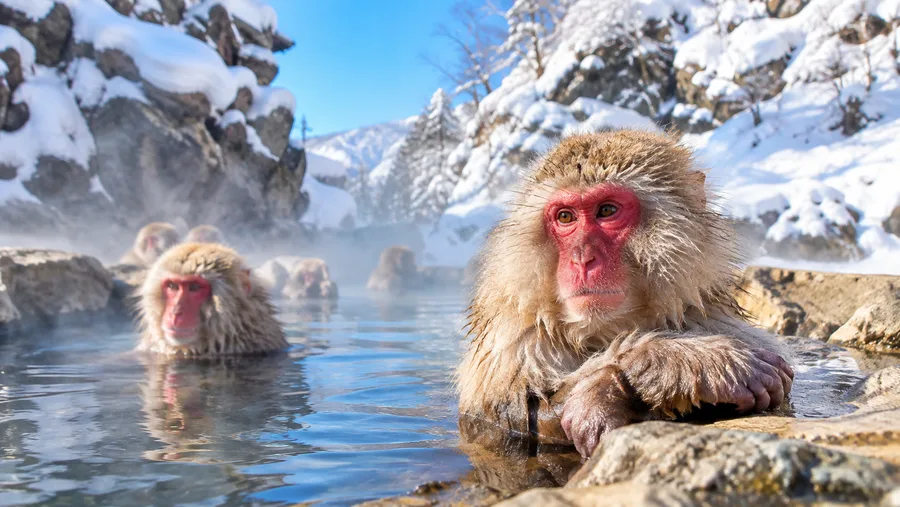
Winter is why this park became famous worldwide. Snow monkey park weather during these months is brutal, cold, and beautiful. Cold air pushes down from Siberia, picking up moisture across the sea before dumping meters of heavy snow across Nagano Prefecture. By mid-December, snow blankets the walking trail, and by early January, the hot spring pool looks like something out of a documentary film. When the weather at snow monkey park drops below freezing, the hot water becomes a sanctuary for the troop. You will see older matriarchs dozing against the rock rim while younger monkeys groom each other in the steaming water.
January and February offer the most reliable conditions for snow-covered photographs. The white powder clings to the steep fir trees, and the monkeys visit the baths almost constantly to regulate their core temperature. Getting there requires careful preparation. The 1.6-kilometer dirt trail from the bus stop turns into a slick sheet of compressed ice and packed mud. You will need sturdy winter boots with good tread, or slip-on metal crampons, which local gift shops sell for about 1,300 yen near the trail entrance. If you arrive in smooth dress shoes or thin sneakers, you will spend the entire walk clinging to wooden guard rails.
Note: The monkeys enter the hot springs to escape biting cold, not on a human schedule. On milder winter days when midday temperatures rise above 4 degrees Celsius, they often prefer foraging on nearby hillsides rather than bathing.
Crowds during January and February are the thickest of the entire year. Tour buses arrive from Tokyo and Nagano City starting around 10:30 in the morning, funneling hundreds of visitors down the narrow forest trail. By midday, people stand three deep along the wooden barrier surrounding the bath. If you want quiet time with the animals, plan to stay overnight in nearby Yamanouchi or the historic village of Shibu Onsen. That gives you the chance to walk into the park right as the gates open at 9:00 AM, long before the day tours make it up the mountain.
March brings the slow retreat of deep winter. Temperatures rise to an average of 4 to 8 degrees during daylight hours. Snow along the valley bottom starts to melt, leaving slushy patches and thick mud puddes along the pine forest route. While macaques still bathe during early mornings in March, they spend more midday hours sunning themselves on exposed gravel banks as the afternoon sun breaks through.
Spring Changes: Snow Monkey Park in April and May
Spring in the Japanese Alps arrives weeks later than in coastal Tokyo. Visiting the snow monkey park in april means witnessing a landscape caught halfway between seasons. The deep snowpack melts off the lower branches, revealing brown forest floor, patchy ice, and green moss. Many visitors avoid the park in early spring because the iconic winter landscape is gone, but this transition period has its own distinct appeal. The bitter mountain chill lifts, and walking through the forest becomes an easy stroll rather than an endurance test.
If you are planning a trip to jigokudani snow monkey park in april, keep your expectations realistic regarding the hot spring bath. As daytime temperatures climb toward 14 degrees Celsius, the monkeys simply do not need hot mineral water to survive. You will still find them roaming everywhere, grooming, fighting, and foraging along the Yokoyu River banks, but they rarely sit immersed up to their chins. Later in the month, wildflowers begin to sprout, and the surrounding slopes take on a pale green wash.
- April trail conditions: lingering snow patches melt rapidly, turning dirt sections into slick mud that requires waterproof footwear.
- Newborn season timing: female macaques give birth between late April and early June, making this the best window to see tiny infants.
- Visitor numbers: significantly lower than winter, giving you space to observe troops without fighting tour groups for railing space.
- Daily monkey habits: troop members wander widely across the valley floor, searching for fresh buds, sprouts, and wild mountain plants.
May is honestly one of the most rewarding months for genuine wildlife watching. The forest turns vivid green, cherry blossoms often bloom late at this altitude, and the first crop of monkey infants appears. Newborn macaques, tiny enough to fit into a winter glove, cling tightly to their mothers' bellies. By mid-May, these babies begin taking wobbly steps across the river stones under watchful maternal eyes. The experience feels intimate and natural, completely removed from the winter photo scrums.
Summer Lushness: Snow Monkey Park in June through August
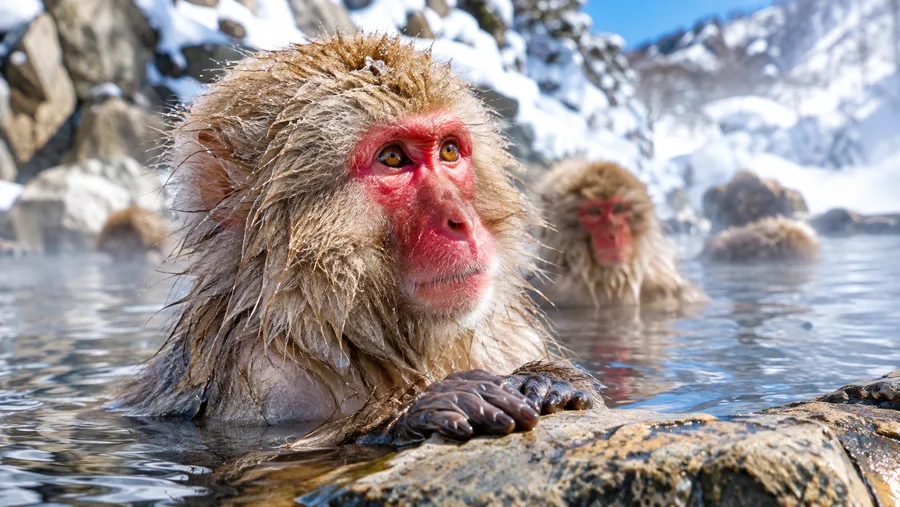
Visiting the snow monkey park in summer offers a completely different encounter with the troop. In jigokudani summer months, the cedar gorge turns into a temperate rainforest. Daytime highs regularly reach 27 to 30 degrees Celsius, accompanied by high humidity and occasional mountain rain showers. The Yokoyu River rushes with clear mountain runoff, and the steep rock faces are covered in ferns and wild ivy.
Do wild snow monkeys soak in hot springs when the air is 28 degrees? Rarely, but they do use the water. In the heat of July and August, young monkeys use the man-made pool like a local swimming hole. Juveniles climb the steep rock ledges and dive straight into the deep end, splashing each other, wrestling underwater, and swimming dog-paddle across the pool to escape older siblings. It is playful, chaotic, and completely different from the stoic soaking you see on television.
Pro tip: Always check the live camera feed before you depart Nagano Station in warmer months, as wild troops sometimes take long morning detours into the high mountains.
Visiting the snow monkey park in june coincides with Japan's rainy season, known locally as tsuyu. Rain can be persistent, meaning you must pack an umbrella or waterproof jacket for the 30-minute walk through the woods. The path stays damp, but park staff maintain the gravel carefully. The biggest advantage of coming between June and August is solitude. You will often share the observation deck with just a dozen other people, allowing you to sit peacefully on a river boulder and watch macaque social hierarchies play out right in front of you.
Book your snow monkey park experience:
Autumn Foliage: Snow Monkey Park in September, October, and November
Autumn brings crisp mountain air and striking visual contrasts to Yamanouchi. Snow monkey park in september marks the end of summer heat, with daytime temperatures hovering comfortably around 20 degrees. The forest stays green through late September, but mornings begin to carry a distinct chill that hints at the coming alpine winter.
October is when the landscape truly transforms. Snow monkey park in october features dramatic autumn foliage, as the maples, beeches, and oaks lining the valley burn yellow, orange, and deep red. The weather at snow monkey park in mid-autumn is perhaps the most comfortable for walking. You can wear a light jacket, breathe crisp mountain air, and wander through canopies of turning leaves without breaking a sweat.
However, snow monkey park october visits come with an important biological caveat: the autumn mating season. Macaques become restless, and wild mountain foods like acorns, wild grapes, and chestnuts ripen on high ridges far above the gorge. Troops frequently wander deep into the surrounding mountains to gorge on calorie-dense nuts before winter sets in. When this happens, park rangers hike into the hills with buckets of barley to coax the monkeys back down to the riverbed, but delays are common. There are days in October where the troop does not arrive at the park until late morning or early afternoon.
By the time snow monkey park in november arrives, the colorful foliage drops, leaving bare branches against gray rock. Snow monkey park november temperatures drop quickly, with night freezes becoming regular and daytime temperatures hovering around 7 degrees. In late November, the first flakes of winter usually fall across the gorge. The jigokudani snow monkey park in november experience offers a foretaste of winter, with macaques returning regularly to the hot spring pools to warm up, but without the waist-deep snow drifts of January.
Best Time of Day to Visit Snow Monkey Park and Seasonal Planning
Choosing which month to travel is only half the battle. Figuring out the best time of day to visit snow monkey park matters just as much if you want to avoid feeling trapped in a crowd. The troop sleeps high on mountain ridges above the canyon walls to stay safe from predators like mountain hawk-eagles. Each morning between 8:30 and 9:30 AM, they scramble down the steep rock faces to the river floor, where park staff toss grain to keep them within the park grounds.
| Season | Avg Day Temp | Snow Cover | Bathing Behavior | Crowd Level |
|---|---|---|---|---|
| Winter (Dec - Feb) | -4°C to 2°C | Heavy (50-150 cm) | Very frequent | Extremely high |
| Spring (Mar - May) | 5°C to 18°C | Melting to none | Occasional mornings | Moderate |
| Summer (Jun - Aug) | 20°C to 29°C | None | Swimming and diving | Low |
| Autumn (Sep - Nov) | 6°C to 20°C | None until late Nov | Increases as temps drop | Moderate to high |
If you want clear photographs without thirty heads blocking your camera lens, timing your arrival around opening hours is essential. You can easily figure out bus and train connections using our guide to getting to the park from Tokyo or Nagano. Walking through the snowy woods in morning silence, with only the crunch of your own boots on gravel, sets an entirely different mood than joining the noon rush.
- Opening hour (8:30 AM summer / 9:00 AM winter): quietest time of day, optimal light on the hot spring pool, and monkeys are fresh and hungry.
- Midday peak (11:00 AM to 2:00 PM): heavy concentration of group tours, busy trails, and crowded photo platforms around the main bath.
- Late afternoon (after 3:00 PM): crowds thin out rapidly as tour buses leave, but valley shadows fall quickly and monkeys begin hiking back uphill toward their sleeping trees.
- Feeding times: staff scatter seeds roughly three times daily, causing bursts of chatter, scurrying, and social tension among dominant males.
Lighting inside the gorge changes quickly due to the steep surrounding mountains. In deep winter, direct sunlight hits the bath for only about two hours around midday. During early morning and late afternoon, the riverbed sits in cold blue shade. Photographers looking for soft, diffused light across the monkeys' fur often prefer overcast winter mornings when falling snow provides a clean, neutral background.
Frequently Asked Questions about best time to visit snow monkey park
What is the single best month to see snow monkeys in the hot springs?
January and February are without question the best months. Heavy snow blankets the gorge, temperatures drop well below freezing, and monkeys spend hours huddled together in the hot spring water.
Is it worth visiting Jigokudani outside of winter?
Yes, especially if you enjoy natural wildlife watching without massive crowds. May is wonderful for seeing tiny newborn infants, while July and August allow you to see young monkeys swimming and playing in the river.
What is the best time of day to arrive at the park?
Aim to arrive right at opening time, between 8:30 AM and 9:00 AM depending on the season. You will beat the tour buses arriving from Nagano and catch the monkeys coming down the cliffs for morning feed.
Why are monkeys sometimes missing during October and November?
Autumn is the macaque mating season, coinciding with the ripening of wild fruits and nuts in the high mountains. The animals frequently wander outside park boundaries to forage and mate before winter arrives.
Quick Reference
- Peak snow scenery: January to mid-February
- Newborn baby monkey season: late April through early June
- Average winter temperature: minus 5 degrees Celsius
- Forest trail distance: 1.6 kilometers (about 30 minutes each way)
Book your snow monkey park experience:
The Bottom Line
Your ideal travel window comes down to what you care about most on the trail. If you cannot imagine leaving Japan without that classic photograph of a macaque wearing a hat of powdered snow, brave the cold and head into the mountains during mid-January or early February. Just prepare yourself for frozen boots, packed footpaths, and plenty of company along the wooden railings. If your schedule forces a visit in April, June, or October, do not cross it off your itinerary. You will encounter active, curious wild animals living real lives in a peaceful alpine river valley, free from the winter tourist frenzy.
Read more about snow monkey park.